
7 Best Energy Efficient Conventional Window Air Conditioners of 2026
If your room needs a cooling upgrade, these energy-efficient conventional window units offer powerful relief without a shocking utility bill. This guide details seven top-rated models, comparing their energy-saving features and real-world cooling performance based on manufacturer specs.
 By Daniel Brooks
Updated October 7, 2026
By Daniel Brooks
Updated October 7, 2026
Choosing among energy efficient conventional window air conditioners can significantly reduce your summer cooling costs while maintaining comfort. This guide is for homeowners and renters looking for reliable cooling solutions that prioritize energy savings without sacrificing performance. We compared seven conventional window units based on manufacturer specifications for efficiency features like Eco and Sleep modes, smart controls, and quiet operation. For more options, browse our complete category of Conventional Window Air Conditioners.
All Products Compared
| Product | Best For | Cooling Capacity | Room Size | Noise | Notable Feature |
|---|---|---|---|---|---|
| Frigidaire 8,000 BTU Window Air Conditioner | Medium rooms | 8,000 BTU | 350 sq. ft. | 54 dBA | Eco Mode, 6-way airflow |
| Midea 5,000 BTU Window Air Conditioner | Small rooms | 5,000 BTU | 150 sq. ft. | 52 dBA | Eco mode, EasyTimer |
| Midea 8,000 BTU Smart Inverter Air Conditioner | Multi-season use | 8,000 BTU | 350 sq. ft. | 45 dBA | Inverter tech, heat pump |
| TCL 10,000 BTU Smart Window Air Conditioner | Large rooms | 10,000 BTU | 450 sq. ft. | Not listed | App, voice, & remote control |
| Frigidaire 5,000 BTU Window Air Conditioner | Small bedrooms | 5,000 BTU | 150 sq. ft. | 52 dBA | Effortless Temperature Control |
| Midea 8,000 BTU Window Air Conditioner | Medium rooms | 8,000 BTU | 350 sq. ft. | Not listed | SmartHome app control |
| GE Window Air Conditioner 5,000 BTU AC Unit | Budget small rooms | 5,000 BTU | 150 sq. ft. | 52 dBA (low) | Simple mechanical controls |
| Award | Product | WikiCooling Score About WikiCooling ScoreThe WikiCooling Score is our own rating from 0 to 10, based on the criteria described on our How We Review page. It reflects research, not laboratory measurement, and is never influenced by manufacturers, retailers, or affiliate commissions. Learn more › | |
|---|---|---|---|
| Best Value |
 Frigidaire 8,000 BTU Window Air Conditioner
|
8.3/10 | Buy |
 Midea 5,000 BTU Window Air Conditioner
|
8.1/10 | Buy | |
| Best Premium |
 Midea 8,000 BTU Smart Inverter Window Air
|
8.0/10 | Buy |
| Best Overall |
 TCL 10,000 BTU Smart Window Air Conditioner
|
8.6/10 | Buy |
| Best Budget |
 Frigidaire 5,000 BTU Window Air Conditioner
|
8.3/10 | Buy |
 Midea 8,000 BTU Window Air Conditioner
|
8.0/10 | Buy | |
 GE 5,000 BTU Window Air Conditioner
|
7.6/10 | Buy |
Frigidaire 8,000 BTU Window Air Conditioner
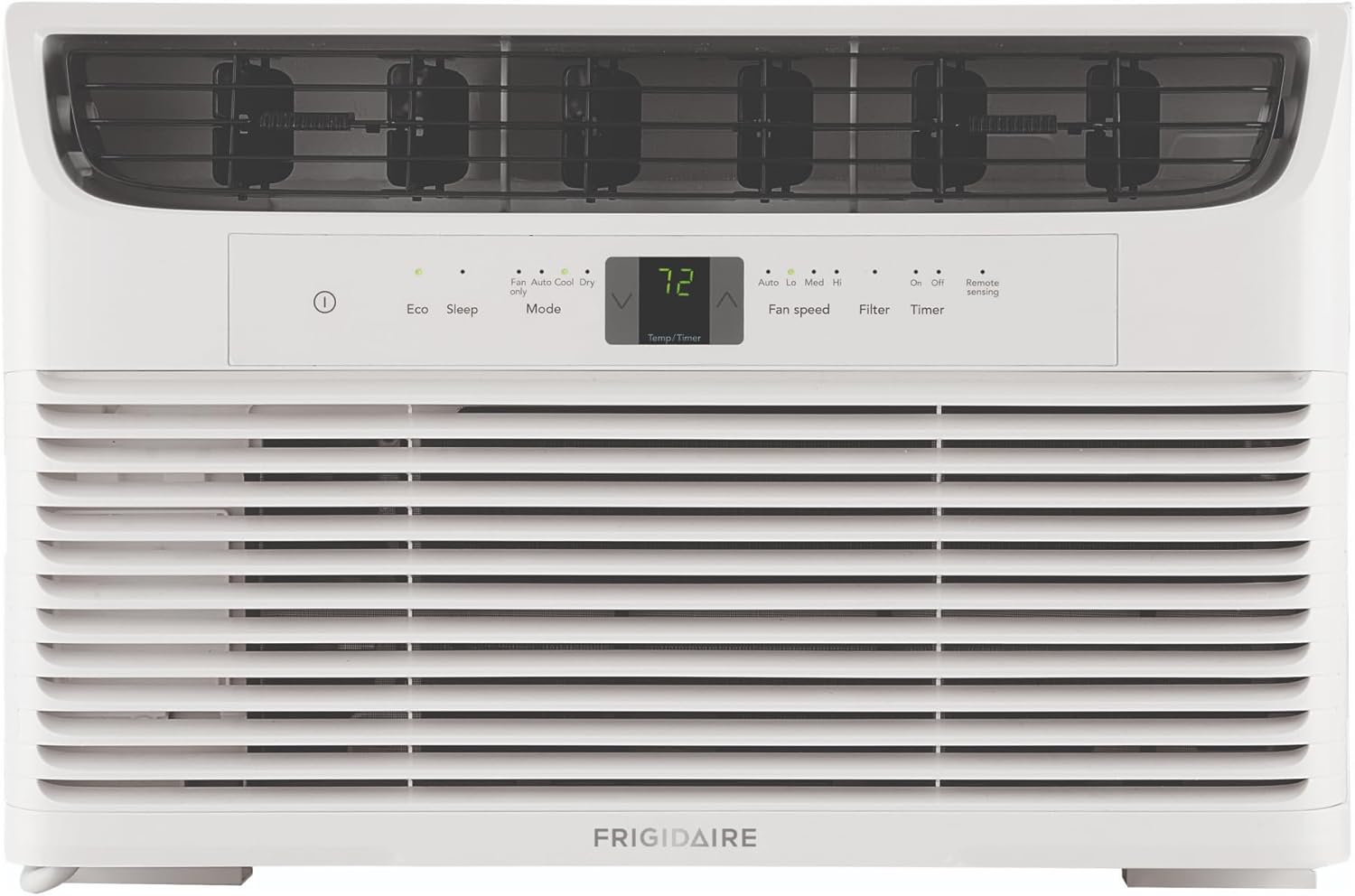
With 8,000 BTU of cooling power and coverage for up to 350 sq ft, this Frigidaire window AC suits small bedrooms and compact living spaces. It includes three fan speeds, 6-way airflow, Eco Mode, Sleep Mode, and a washable filter. The 55 db noise level and remote control make it a practical mid-range choice for everyday cooling.
Pros
- Covers rooms up to 350 sq ft
- Three fan speeds and 6-way airflow
- Eco Mode and Sleep Mode save energy
- Washable filter has cleaning reminders
- Remote control and 24-hour timer
Cons
- Washable filter requires periodic maintenance
Midea 5,000 BTU Window Air Conditioner
Designed for small spaces up to 150 square feet, this Midea window air conditioner offers reliable cooling with a 5,000 BTU capacity. Its quiet operation at 52 dB and included remote control make it a convenient choice for bedrooms or home offices. The washable filter and EcoSave mode add to its appeal for budget-conscious users.
Pros
- Quiet operation at 52 dB
- Washable reusable filter
- Remote control with multiple modes
- Easy installation with included bracket
- Auto restart after power loss
Cons
- No inverter compressor
- Fits only standard double-hung windows
- Heavy at 35.5 pounds
Midea 8,000 BTU Smart Inverter Window Air
This Midea window unit combines cooling, heating, and dehumidification for year-round comfort in rooms up to 350 square feet. Its inverter compressor and smart controls deliver quiet, energy-efficient operation, while the heat pump provides supplemental warmth when outdoor temperatures stay above 41°F.
Pros
- Quiet operation at 45 dB
- Energy Star certified with inverter technology
- Smart app and voice control
- Heating and dehumidifier functions
- Washable filter for easy cleaning
Cons
- Heat pump only works above 41°F
- Heavy at 56 pounds, may need help installing
- Fits only double-hung windows
TCL 10,000 BTU Smart Window Air Conditioner
Combining cooling, fan, and dehumidifier functions, this window AC serves rooms up to 450 square feet. Smart connectivity via the TCL Home app and voice assistants makes it easy to adjust settings, while Sleep and Eco modes help manage energy use. It fits well for those who want a connected, multi-functional window unit with moderate noise levels.
Pros
- Powerful enough for medium rooms
- Three functions in one unit
- Smart app and voice controls
- Energy-saving Sleep and Eco modes
- Washable filter reduces maintenance
Cons
- Noise level of 54 dB may be audible
- Heavy at 48.5 pounds for installation
- Not an inverter model for variable speed
Frigidaire 5,000 BTU Window Air Conditioner
This Frigidaire window air conditioner cools rooms up to 150 sq. ft. with 5,000 BTU. It operates quietly at 52 dBA and features two fan speeds and effortless temperature control. Ideal for small bedrooms or living spaces.
Pros
- Quiet operation at 52 dBA
- Easy-to-clean washable filter
- Auto restart feature
- Adjustable side panels for fit
- Two fan speeds for customization
Cons
- No inverter compressor
- Manual button controls only
- Heavy at 35.3 pounds
Midea 8,000 BTU Window Air Conditioner
This Midea window air conditioner offers 8,000 BTU cooling for rooms up to 350 sq ft, with 3-in-1 functionality and smart home compatibility. It is a budget-friendly choice for those who want app and voice control, but buyer reviews note that noise levels can be higher than specified.
Pros
- Smart app and voice control
- 3-in-1 cooling, dehumidifying, and fan
- Washable filter for easy maintenance
- Easy to install and setup
- Remote control with 4-way air direction
Cons
- Noise levels can be higher than listed 53.5 dB
- Requires external support for window ledge
- Heavy at 50.7 pounds for single installation
GE 5,000 BTU Window Air Conditioner
A budget-friendly window AC for small spaces up to 150 square feet, this GE unit uses simple mechanical controls and two cooling modes. It operates quietly at 52-56 dBA, making it suitable for bedrooms and dorm rooms. Easy DIY installation fits double-hung windows 27 to 36 inches wide.
Pros
- Quiet operation at 52-56 dBA
- Easy mechanical controls, no setup
- Washable filter, low maintenance
- Low power draw at 440 watts
- Fits narrow windows down to 27 inches
Cons
- Fits only double-hung windows
- No smart or remote control features
- May need wider side panels for extra-wide windows
Top 3 Energy Efficient Conventional Window Air Conditioners Reviewed
#1 Frigidaire 8,000 BTU Window Air Conditioner: Best Overall
Why We Picked It
The Frigidaire 8,000 BTU Window Air Conditioner earns the top spot for its balanced combination of energy-saving features and effective cooling for medium-sized rooms. Its Eco Mode helps reduce energy consumption while maintaining comfort, and the Sleep Mode gradually adjusts temperature overnight for further savings. The unit’s quiet 54 dBA operation makes it suitable for bedrooms.
Key Specifications
- Cooling Capacity: 8,000 BTU
- Room Size: Up to 350 sq. ft.
- Noise Level: 54 dBA
- Fan Speeds: 3
- Special Modes: Eco, Sleep, Dry
| Pros | Cons |
|---|---|
|
|
Best For
This unit is best for cooling medium-sized rooms up to 350 square feet where quiet operation and energy-saving features are priorities.
Check the current price and specifications for the Frigidaire 8,000 BTU Window Air Conditioner.
#2 Midea 5,000 BTU Window Air Conditioner: Best for Small Rooms
Why We Picked It
We selected the Midea 5,000 BTU Window Air Conditioner for small rooms because it brings energy-efficient features to a low-priced unit. Its Eco mode and programmable EasyTimer help manage energy use, while the dehumidifier mode adds versatility. At 52 dBA on low, it offers quiet cooling for small spaces.
Key Specifications
- Cooling Capacity: 5,000 BTU
- Room Size: Up to 150 sq. ft.
- Noise Level: 52 dBA (low mode)
- Modes: Cool, Fan, Dehumidifier
- Control: Remote and LED display
| Pros | Cons |
|---|---|
|
|
Best For
This model is best for budget-conscious buyers needing efficient cooling for small rooms up to 150 square feet.
Check the current price and specifications for the Midea 5,000 BTU Window Air Conditioner.
#3 Midea 8,000 BTU Smart Inverter Window Air Conditioner with Heat: Best for Multi-Season Use
Why We Picked It
The Midea 8,000 BTU Smart Inverter Air Conditioner stands out for its advanced inverter technology, which can provide up to 35% energy savings compared to standard units. Its ENERGY STAR certification and heat pump function offer year-round climate control efficiency. The ultra-quiet 45 dBA operation and smart app control add to its appeal for energy-conscious users.
Key Specifications
- Cooling Capacity: 8,000 BTU
- Room Size: Up to 350 sq. ft.
- Noise Level: 45 dBA
- Certification: ENERGY STAR
- Technology: Inverter compressor
| Pros | Cons |
|---|---|
|
|
Best For
This unit is best for those seeking maximum energy efficiency and year-round climate control for rooms up to 350 square feet.
Check the current price and specifications for the Midea 8,000 BTU Smart Inverter Air Conditioner.
How to Choose an Energy Efficient Conventional Window Air Conditioner
Match Cooling Capacity to Your Room
Selecting the correct BTU rating is the first step toward efficiency. An oversized unit will cycle on and off too frequently, wasting energy, while an undersized unit will run constantly without reaching the desired temperature. Use the sizing chart below as a starting point, adjusting for factors like sunlight, occupancy, and room use.
ENERGY STAR publishes this general guide for sizing a room air conditioner by floor area:
| Room Size (sq ft) | Cooling Capacity (BTU/hr) |
|---|---|
| 100 to 150 | 5,000 |
| 150 to 250 | 6,000 |
| 250 to 300 | 7,000 |
| 300 to 350 | 8,000 |
| 350 to 400 | 9,000 |
| 400 to 450 | 10,000 |
| 450 to 550 | 12,000 |
| 550 to 700 | 14,000 |
| 700 to 1,000 | 18,000 |
Adjust for your room: reduce capacity by 10 percent for a heavily shaded room, increase it by 10 percent for a very sunny room, add 600 BTU for each regular occupant beyond two, and add 4,000 BTU if the unit cools a kitchen. Source: ENERGY STAR.
Window Fit and Installation
A proper seal is critical for efficiency. Measure your window’s opening width and height precisely and compare them to the unit’s required dimensions. Most units include expandable side panels, but a poor fit allows cool air to escape and warm air to enter, forcing the compressor to work harder. Follow the manufacturer’s installation instructions exactly for optimal performance.
Noise and Inverter Compressors
Noise level, measured in decibels (dBA), impacts livability but also hints at compressor technology. Traditional units operate at a fixed speed, cycling loudly on and off. Inverter compressors, like in the Midea Smart Inverter model, vary their speed to maintain temperature more quietly and efficiently, reducing energy use. For bedrooms, look for units rated below 55 dBA.
Energy Efficiency Features
Look for specific modes designed to save power. Eco Mode typically adjusts the compressor and fan to use minimal energy while maintaining comfort. Sleep Mode gradually increases the temperature overnight to match your body’s natural cooling and reduce runtime. A 24-hour timer lets you program operation to match your schedule, avoiding cooling an empty room.
Controls and Smart Features
Convenient controls can prevent energy waste. A remote allows you to adjust settings without getting up, while a programmable timer ensures the unit isn’t left running unnecessarily. Smart features like app and voice control offer advanced scheduling and the ability to turn off the unit remotely if you forget when leaving home, directly impacting energy consumption.
Drainage and Maintenance
Regular maintenance preserves efficiency. A washable, reusable filter should be cleaned monthly during peak season to maintain airflow. Some units have a Dry or Dehumidifier mode that removes moisture; check if manual draining is required under normal conditions. A clean filter and proper drainage ensure the unit doesn’t overwork, saving energy over its lifespan.
How We Evaluate Conventional Window Air Conditioners
Our evaluation is based on manufacturer specifications, listing information, and aggregated buyer ratings. For energy efficiency, we prioritize units with dedicated Eco or Sleep modes, ENERGY STAR certification, inverter technology, and programmable timers. We also weigh cooling capacity for the intended room size, noise levels for livability, installation requirements, and overall value. Always confirm the exact model’s capacity, electrical needs, and window size compatibility before purchase.
Frequently Asked Questions
What size window air conditioner do I need for a mid-sized bedroom?
Find the room’s floor area in the sizing chart and start from the capacity in that row. Adjust this base capacity based on your room’s sunlight, number of occupants, and whether it’s a kitchen. An accurately sized unit will cool effectively without wasteful short-cycling.
How quiet should a window AC be for a bedroom?
For bedroom use, look for a noise rating at or below 55 decibels (dBA). Many models list a “low” speed noise level, which is most relevant for nighttime operation. Inverter compressors often provide quieter and more consistent operation than traditional fixed-speed compressors.
Do I need a dedicated circuit for a window air conditioner?
Check the unit’s listed voltage and amperage in its manual. Most mid-size units (8,000-10,000 BTU) require a 115V/15A dedicated circuit to operate safely and reliably. Plugging a high-draw appliance into a shared circuit can trip breakers and poses a fire hazard.
What is the difference between Eco Mode and Sleep Mode?
Eco Mode typically optimizes the compressor and fan speed to use minimal energy while maintaining the set temperature. Sleep Mode gradually increases the temperature setting over several hours to reduce runtime as you sleep, aligning with your body’s natural temperature drop and saving energy.
Can I install a window air conditioner myself?
Most units are designed for DIY installation if your window meets the size requirements and you follow the included instructions precisely. You will typically need a screwdriver. Ensure the unit is securely mounted and properly sealed with the provided insulation to prevent air leaks that reduce efficiency.
Final Verdict
The Frigidaire 8,000 BTU Window Air Conditioner stands out as our top choice for its effective balance of cooling power, energy-saving Eco and Sleep modes, and quiet operation for medium-sized rooms. For buyers prioritizing the lowest upfront cost, the Midea 5,000 BTU Window Air Conditioner offers excellent value with efficient features. The key consideration for any energy-efficient window AC is matching the unit’s capacity to your room size and utilizing its programmable features to avoid cooling an empty space, which will have the greatest impact on your energy bill.
About the author
Daniel Brooks is a home cooling editor at WikiCooling, covering window, portable, through-the-wall and mini-split air conditioners, fans, and dehumidifiers. He researches cooling capacity, energy efficiency, noise levels, installation requirements, and buyer feedback to help homeowners choose the right unit for their room size, climate, and budget.