
LG LT1016CER Review: 9,800 BTU 115V Through-the-Wall AC
A 115V cooling-only through-the-wall air conditioner rated 9,800 BTU for rooms up to 440 sq ft, with an EER of 10.7, R-32 refrigerant, a remote and auto restart.
 By Daniel Brooks
Updated October 22, 2026
The LG LT1016CER is one of the most common through-the-wall air conditioners in American apartments, and it is easy to see why. It is a cooling-only wall unit rated at 9,800 BTU for rooms up to 440 square feet, it plugs into a standard 115 volt outlet, and its 24 inch wide chassis fits most universal wall sleeves. It sits near the top of our cooling-only through-the-wall air conditioners category by volume of feedback, with a 3.9 out of 5 average from 590 ratings.
Amazon lists it as a 10,000 BTU unit, but LG’s own specifications and model name put it at 9,800 BTU. We use the 9,800 figure throughout this review.
Our Verdict
The LT1016CER is a sensible, no-surprises replacement for an old wall unit in a bedroom, living room or studio apartment. It cools up to 440 square feet, lists an EER of 10.7, uses R-32 refrigerant and draws 920 watts, so it runs on a normal household circuit. Three cooling and fan speeds, an energy saver mode, a 24 hour timer, auto restart and a remote cover everything most people need.
What it does not have is just as clear. There is no Wi-Fi, no inverter compressor and no heat mode, and the wall sleeve is sold separately. If you want a plain, efficient cooling-only wall unit from a major brand, it is a strong choice.

LG 9,800 BTU Through-the-Wall Air Conditioner
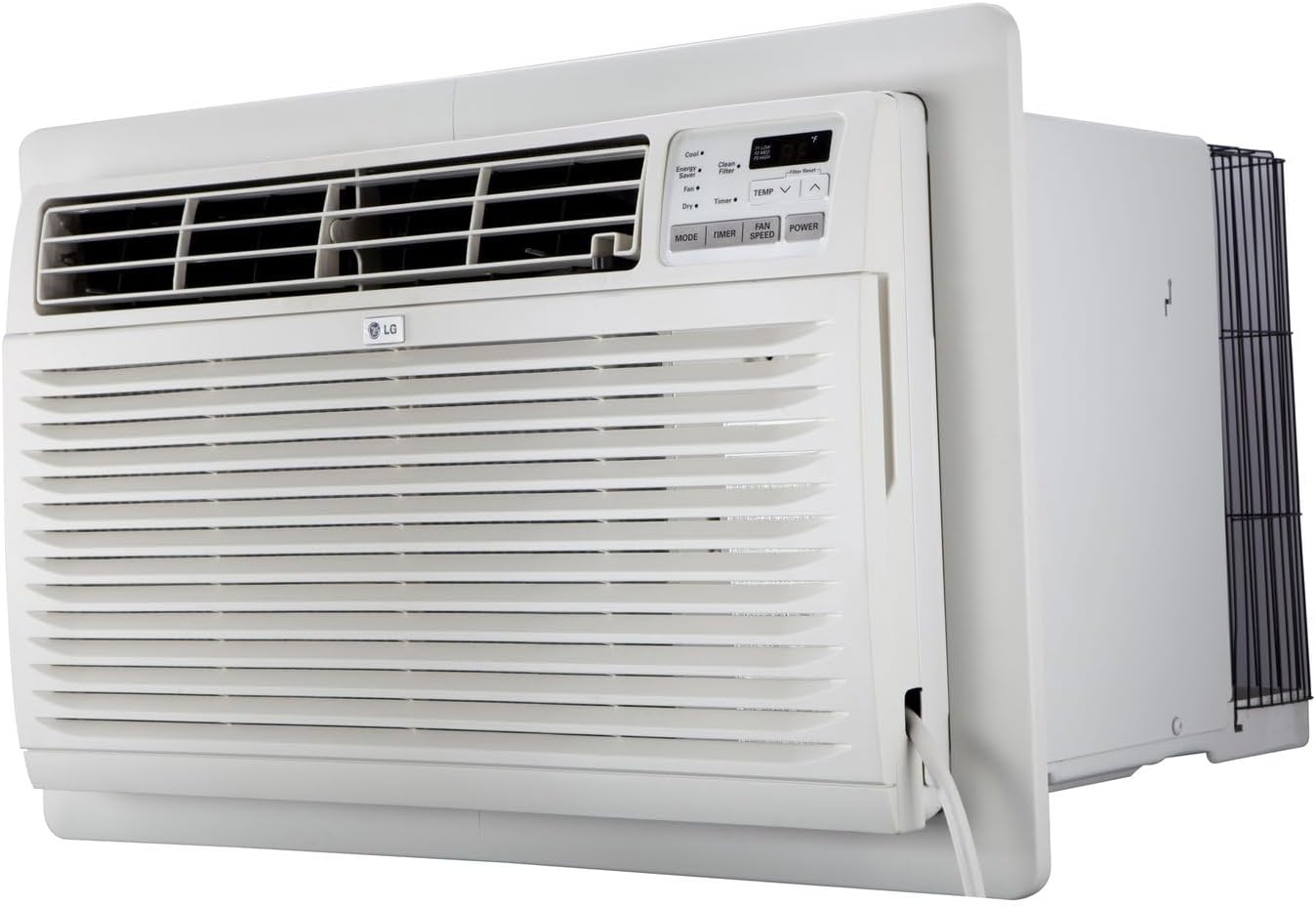


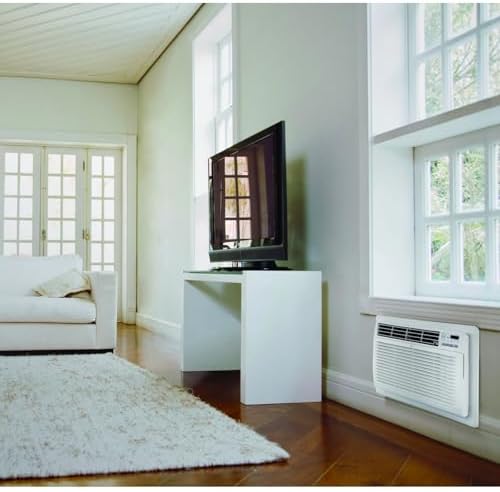


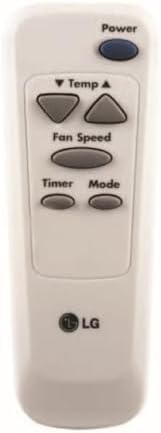


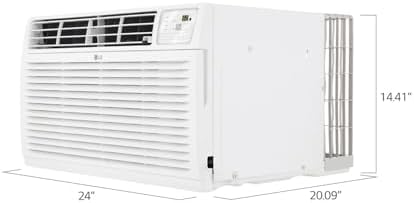

As an Amazon Associate we earn from qualifying purchases. Product prices and availability are accurate as of the date/time indicated.
Key Specifications
| Feature | Specification |
|---|---|
| Brand | LG |
| Model | LT1016CER |
| Type | Cooling-only through-the-wall air conditioner |
| Cooling Capacity | 9,800 BTU |
| Room Size | Up to 440 sq ft |
| Power | 115 volts, 920 watts |
| Efficiency | EER 10.7 |
| Refrigerant | R-32 |
| Noise Level | 56 dB (listed) |
| Dehumidifying | Up to 2.9 pints per hour |
| Dimensions | 24 x 14.4 x 20.1 inches (W x H x D) |
| Weight | 77 pounds |
| Wall Sleeve | Not included |
| Warranty | 1 year parts and labor |
Cooling Capacity and Room Size
At 9,800 BTU, the LT1016CER sits in the most popular size class for wall units. LG rates it for rooms up to 440 square feet, which covers a typical primary bedroom, a small living room or an open studio. In the sizing chart below, that lands right in the 10,000 BTU band, so the rating is realistic rather than optimistic.
A turbo fan pushes air through three cooling speeds, and 4-way air deflection lets you aim the louvers up, down, left or right. That matters more on a wall unit than you might expect, because the unit is fixed in place and you cannot turn it to face the bed or sofa.
ENERGY STAR publishes this general guide for sizing a room air conditioner by floor area:
| Room Size (sq ft) | Cooling Capacity (BTU/hr) |
|---|---|
| 100 to 150 | 5,000 |
| 150 to 250 | 6,000 |
| 250 to 300 | 7,000 |
| 300 to 350 | 8,000 |
| 350 to 400 | 9,000 |
| 400 to 450 | 10,000 |
| 450 to 550 | 12,000 |
| 550 to 700 | 14,000 |
| 700 to 1,000 | 18,000 |
Adjust for your room: reduce capacity by 10 percent for a heavily shaded room, increase it by 10 percent for a very sunny room, add 600 BTU for each regular occupant beyond two, and add 4,000 BTU if the unit cools a kitchen. Source: ENERGY STAR.
Through-the-Wall Installation and Sleeve Fit
This is a true through-the-wall chassis, not a window unit. LG says it is suited to through-the-wall installation and is not properly vented for a standard window, because the side louvers that a window unit uses to pull in outdoor air would be blocked by the wall.
The chassis measures 24 inches wide, 14.4 inches tall and 20.1 inches deep, and LG designed it to fit most universal sleeves. If you are replacing an older unit of the same size, check the sleeve’s inside dimensions and the depth of your wall before ordering, since the sleeve is not included. Inside the box you get a plastic snap-together trim kit for a clean finish around the opening, a plastic mesh grille for the outdoor side, insulation foam, a washable filter and the remote.
At 77 pounds, this is a two-person job when you slide it into the sleeve. Once it is in, the trim kit hides the gap and the unit looks like a built-in.
Energy Use and Efficiency
The listed EER of 10.7 is good for a conventional, non-inverter wall unit in this size class. With a draw of 920 watts, it uses less power than a typical hair dryer and sits comfortably on a standard kitchen or bedroom circuit, as long as nothing else heavy shares it.
Energy saver mode helps in practice. It keeps the fan running to circulate air but switches off the compressor once the room reaches your set temperature, then restarts cooling when needed. The 24 hour on and off timer lets you cool the room before you get home without running it all day. LG also uses R-32 refrigerant, which it describes as the most efficient refrigerant currently used in the industry.
Noise
LG lists a sound level of 56 dB. That is about what you would expect from a conventional wall unit with the compressor running. It is fine for a living room and acceptable for a bedroom on the lowest fan speed, but light sleepers who are used to an inverter window unit may notice the compressor cycling on and off. Energy saver mode can make the room quieter between cycles, since only the fan runs once the set point is reached.
Controls and Everyday Use
Controls are simple. There is a digital panel on the front, a remote, three modes, three speeds and the timer. Dry mode removes up to 2.9 pints of moisture per hour, which helps on muggy days when the room feels damp rather than hot. A filter light reminds you to clean the washable filter, and auto restart brings the unit back on with your previous settings after a power cut. There is no app or voice control.
Who It Suits Best
The LT1016CER suits renters and owners with an existing wall sleeve who want a reliable, efficient replacement that runs on a normal outlet. It is a natural fit for bedrooms, home offices and small living rooms. It is less suited to anyone who wants smart control, winter heat or the quietest possible bedroom unit.
Pros and Cons
| Pros | Cons |
|---|---|
| 9,800 BTU for up to 440 sq ft | Wall sleeve sold separately |
| Runs on a standard 115V outlet | No Wi-Fi or app control |
| EER 10.7 with R-32 refrigerant | Conventional, non-inverter compressor |
| Energy saver, timer and auto restart | 56 dB listed sound level |
| Fits most universal sleeves | Heavy at 77 pounds |
Who Should Buy It
| Who Should Buy It? | Who Should Look Elsewhere? |
|---|---|
| Renters replacing an old wall unit | Smart home users |
| Bedrooms and studios up to 440 sq ft | Rooms that also need heat |
| People who want a simple remote | Very light sleepers |
| Homes without a dedicated high-voltage outlet | Large open-plan rooms |
For other options, see our picks for the best 115V through-the-wall air conditioners and the best 10,000 BTU through-the-wall air conditioners.
Final Verdict
The LG LT1016CER is a dependable cooling-only wall unit for rooms up to 440 square feet. It is efficient for its class, easy to live with and fits the sleeves most buildings already have. Skip it only if you need Wi-Fi, heat or an inverter. You can check the current price and details for the LG 9,800 BTU Through-the-Wall Air Conditioner.
Frequently Asked Questions
Is the LG LT1016CER 9,800 or 10,000 BTU?
LG’s specifications and model name list 9,800 BTU. The Amazon title rounds it up to 10,000 BTU.
Does it include a wall sleeve?
No. The wall sleeve is sold separately. The box includes a trim kit, a mesh grille, insulation foam, a filter and a remote.
Can I install it in a window?
LG says it is not properly vented for a standard window installation. It is designed for a through-the-wall sleeve.
What outlet does it need?
It runs on a standard 115 volt outlet and draws 920 watts.
About the author
Daniel Brooks is a home cooling editor at WikiCooling, covering window, portable, through-the-wall and mini-split air conditioners, fans, and dehumidifiers. He researches cooling capacity, energy efficiency, noise levels, installation requirements, and buyer feedback to help homeowners choose the right unit for their room size, climate, and budget.