
6 Best Dehumidifiers for Basements of 2026
We compared six basement dehumidifiers on capacity, drainage, low-temperature performance and efficiency.
 By Daniel Brooks
Updated October 24, 2026
Basements are the dampest part of most homes, and they are often cool and far from a sink. Our list of the best dehumidifiers for basements compares six large-capacity models on coverage, drainage, low-temperature performance and efficiency. To browse every model we cover, visit our Portable Compressor Dehumidifiers page.
Brands rate capacity under different test conditions, so we note the conditions behind each figure and weighed realistic ratings above hot-weather maximums.
All Products Compared
| Product | Best For | Capacity | Coverage | Tank | Drainage | Smart |
|---|---|---|---|---|---|---|
| GE 50 Pint Dehumidifier with Pump | Overall | 50 pints/day | Up to 5,000 sq ft | 15-pint bucket | Bucket, 16 ft pump hose | No |
| Waykar 80 Pint Energy Star Dehumidifier | Cool basements | 80 pints/day (95F/90%) | Up to 5,000 sq ft | Removable tank | Tank, 3.3 ft hose | No |
| DREO 711S 110 Pint Smart Dehumidifier | Smart large tank | 50 to 110 pints/day (86F/90%) | Up to 4,500 ft² | 2 gallons | Tank, hose | DREO app, Alexa, Google |
| Midea 60 Pint Dehumidifier with Pump | Largest Midea | 60 pints/day | Up to 5,500 sq ft | 2.64 gallons | Bucket, hose, pump | Wi-Fi, Alexa, Google |
| Amazon Basics 50 Pint Dehumidifier with Pump | Strict DOE rating | 50 pints/day (2019 DOE) | Up to 2,500 sq ft | Bucket | Bucket, pump | No |
| AEOCKY RHEA-001 80 Pint Most Efficient Dehumidifier | Most Efficient | 80 pints/day (95F/95%) | Up to 5,500 sq ft | Tank | Tank, hose | No |
| Award | Product | WikiCooling Score About WikiCooling ScoreThe WikiCooling Score is our own rating from 0 to 10, based on the criteria described on our How We Review page. It reflects research, not laboratory measurement, and is never influenced by manufacturers, retailers, or affiliate commissions. Learn more › | |
|---|---|---|---|
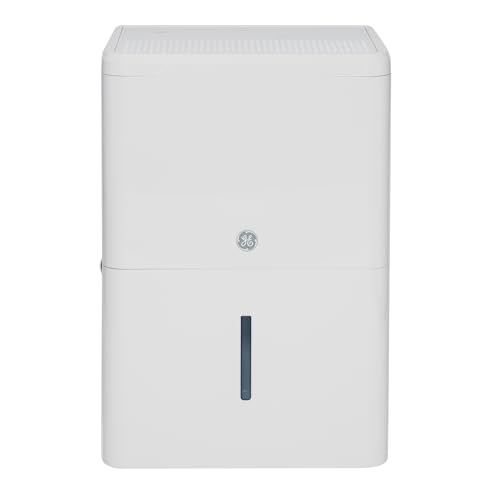 GE 50 Pint Dehumidifier with Pump |
Buy | ||
| Best Overall |
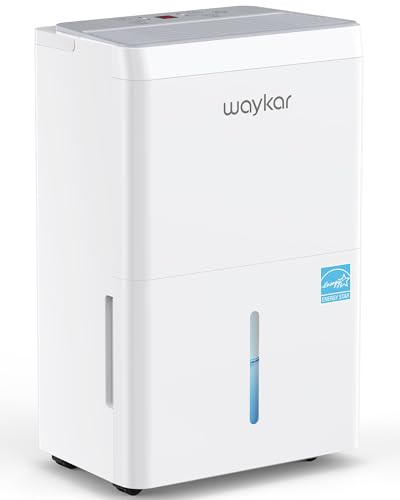 Waykar 80-Pint 5000 Sq Ft ENERGY STAR Dehumidifier |
Buy | |
| Best Premium |
 DREO 711S 110 Pint Smart Dehumidifier |
Buy | |
 Midea 60 Pint Dehumidifier with Pump |
Buy | ||
| Best Value |
 Amazon Basics 50 Pint Dehumidifier with Pump |
Buy | |
| Best Budget |
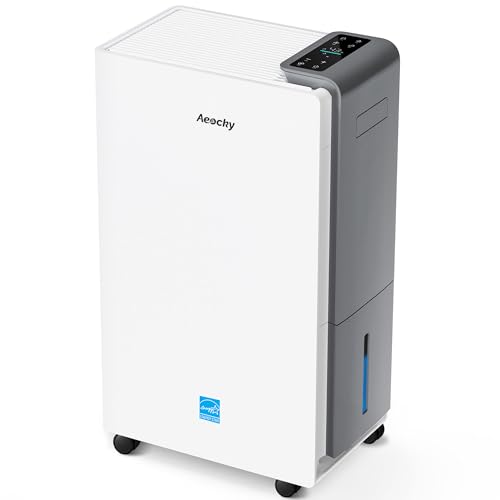 AEOCKY RHEA-001 80 Pint Most Efficient |
Buy |


Top 3 Dehumidifiers for Basements Reviewed
#1 GE 50 Pint Dehumidifier with Pump: Best Overall
Why We Picked It
GE’s 50-pint with pump is our top basement pick. The pump lifts water up to 15 vertical feet through a 16 ft hose, so it can drain to a laundry sink from a below-grade floor, and it covers up to 5,000 sq ft. Smart Dry adjusts the fan to the room’s humidity, and the humidistat sets anywhere from 30% to 70%.
GE’s 50-pint with pump is built for below-grade basements. The pump moves water up to 15 vertical feet to a sink or drain through the included 16 ft hose, so you can run it without emptying a bucket. It covers up to 5,000 sq ft, and GE’s Smart Dry adjusts fan speed to the room’s humidity to avoid over-drying and save electricity. You can set humidity from 30% to 70%, and a 10-second alarm sounds when the 15-pint bucket is full or missing.
Key Specifications
- Capacity: 50 pints per day
- Coverage: Up to 5,000 sq ft
- Pump: Up to 15 ft vertical, 16 ft hose
- Humidity Range: 30% to 70%
- Bucket: 15 pints
- Feature: Smart Dry fan control
| Pros | Cons |
|---|---|
|
|
Things to Consider
This version has no Wi-Fi. If you want app control and can drain by gravity, the GE 50-pint Wi-Fi model is the better fit.
Best For
This dehumidifier is best for below-grade basements without a floor drain.
Check the current price and availability of the GE 50 Pint Dehumidifier with Pump on Amazon.
Read our full GE 50 Pint Dehumidifier with Pump review.
#2 Waykar 80 Pint Energy Star Dehumidifier: Best for Cool Basements
Why We Picked It
Waykar’s 80-pint is the pick for cool basements. Its auto defrost works down to 42 degrees F, Comfort mode sets the target humidity based on room temperature, and it covers up to 5,000 sq ft at a rated 40dB on low.
Waykar’s 80-pint extracts up to 80 pints a day at 95 degrees F and 90% humidity and covers up to 5,000 sq ft. It meets 2025 ENERGY STAR standards, runs at 40dB on low, and Comfort mode picks a target humidity based on room temperature. Auto defrost works down to 42 degrees F, and a 3.3 ft hose is included for continuous draining.
Key Specifications
- Capacity: 80 pints per day at 95 degrees F, 90% RH
- Coverage: Up to 5,000 sq ft
- Noise Level: 40 dB on low
- Low Temperature: Auto defrost down to 42 degrees F
- Drain Hose: 3.3 ft included
- Certification: 2025 ENERGY STAR
| Pros | Cons |
|---|---|
|
|
Things to Consider
The Comfort mode is the standout: it lowers the target humidity automatically as the room warms.
Best For
This dehumidifier is best for unheated basements and garages.
Check the current price and availability of the Waykar 80 Pint Energy Star Dehumidifier on Amazon.
Read our full Waykar 80 Pint Energy Star Dehumidifier review.
#3 DREO 711S 110 Pint Smart Dehumidifier: Best Smart Basement Dehumidifier
Why We Picked It
DREO’s 711S is the smart basement pick. Its 2 gallon tank runs over 8 hours between emptying, the DREO app and voice assistants control it remotely, and it covers up to 4,500 ft².
DREO’s 711S removes 50 to 110 pints a day at 86 degrees F and 90% humidity across up to 4,500 ft². DREO says it removes up to 4.0 pints per kWh, beating the latest ENERGY STAR threshold. Comfort, Auto and Continuous modes hold humidity with a built-in sensor, the 2 gallon tank runs over 8 hours between emptying, and a drain hose is included. The DREO app, Alexa and Google Home handle schedules and remote control, and the unit shuts off if tipped.
Key Specifications
- Capacity: 50 to 110 pints per day at 86 degrees F, 90% RH
- Coverage: Up to 4,500 ft²
- Efficiency: Up to 4.0 pints per kWh
- Tank: 2 gallons
- Smart Control: DREO app, Alexa, Google Home
- Safety: ETL, tip-over shutoff
| Pros | Cons |
|---|---|
|
|
Things to Consider
The capacity is quoted as a range at 86 degrees F, so expect the lower figure in a cool basement.
Best For
This dehumidifier is best for basements you rarely visit.
Check the current price and availability of the DREO 711S 110 Pint Smart Dehumidifier on Amazon.
Read our full DREO 711S 110 Pint Smart Dehumidifier review.
Other Models Worth Considering
Midea 60 Pint Dehumidifier with Pump. Midea’s 60-pint with pump covers up to 5,500 sq ft with a 2.64 gallon tank and Wi-Fi.
Amazon Basics 50 Pint Dehumidifier with Pump. Amazon Basics’ 50-pint with pump is rated under the strict 2019 DOE test and is ENERGY STAR certified.
AEOCKY RHEA-001 80 Pint Most Efficient Dehumidifier. AEOCKY’s RHEA-001 is ENERGY STAR Most Efficient 2025 and lists a separate basement rating.
What to Expect from Dehumidifiers for Basements
A portable compressor dehumidifier works like a small refrigerator: a fan draws damp air over cold coils, water condenses and drips into a bucket or out through a hose, and the dried air passes back into the room. It suits bedrooms, bathrooms, basements and laundry rooms, and most units have a humidistat that holds the humidity at a level you set.
Compressor models remove far more water than small thermoelectric units, but they are heavier, hum while they run and lose capacity in cold rooms. Expect to empty the bucket regularly unless you use a drain hose or a built-in pump.
For more options, see our guides to dehumidifiers with pump and dehumidifiers for large rooms. The product cards show the current price for each dehumidifier.
How to Choose a Dehumidifier for Your Basement
Match Capacity to the Space
Small units suit a bedroom, bathroom or closet. Mid-size units handle a damp bedroom, a living room or a small basement. Large units are for full basements, laundry rooms and spaces that smell musty or show condensation. When in doubt, a slightly larger unit running on low is quieter and more efficient than a small one running flat out.
Decide Whether You Need a Pump
A pump is worth paying for when there is no floor drain below the unit. It pushes water up and across the room to a sink, a laundry tub or a window, so the dehumidifier can run unattended for weeks. If a floor drain sits lower than the unit, a gravity hose does the same job for less.
Check Low-Temperature Performance
Compressor dehumidifiers lose capacity in cool rooms, and their coils can frost. For an unheated basement or garage, look for auto defrost and a stated minimum operating temperature.
Place It for Best Results
Set the dehumidifier a few inches away from walls and furniture so air can flow in and out, close windows and doors to the space, and keep it on a level floor. In a basement, a central spot works better than a corner.
How We Evaluate Dehumidifiers for Basements
We rank dehumidifiers on manufacturer specifications and listing details: rated capacity and the test conditions behind it, coverage, drainage options, efficiency, controls and noise. For this list we kept only new, in-stock compressor units and left out renewed listings, thermoelectric mini units, commercial crawl space models and listings with too little data. For basements we weighed realistic capacity, drainage and low-temperature performance first, then efficiency and controls.
Frequently Asked Questions
What humidity should a basement be?
Aim for 45% to 50%. Above 60% mold and musty smells take hold.
Do I need a pump for my basement dehumidifier?
Only if there is no floor drain lower than the unit. A pump pushes water up to a sink or out of a window.
Can a dehumidifier run in a cold basement?
Yes, if it has auto defrost. Capacity drops as the temperature falls, so size up for cool spaces.
Should I close basement windows when running a dehumidifier?
Yes. Open windows let humid outdoor air in and make the unit work harder.
For a closer look at individual models, read our full GE 50 Pint Dehumidifier with Pump review, Waykar 80-Pint 5000 Sq Ft ENERGY STAR Dehumidifier review, DREO 711S 110 Pint Smart Dehumidifier review and Amazon Basics 50 Pint Dehumidifier with Pump review.
Final Verdict
The GE 50 Pint Dehumidifier with Pump is the best dehumidifier for basements, with a pump that lifts water up to 15 ft and coverage up to 5,000 sq ft. For cool basements, choose the Waykar 80 Pint Energy Star Dehumidifier. For remote control and a large tank, the DREO 711S 110 Pint Smart Dehumidifier is the smart pick.
About the author
Daniel Brooks is a home cooling editor at WikiCooling, covering window, portable, through-the-wall and mini-split air conditioners, fans, and dehumidifiers. He researches cooling capacity, energy efficiency, noise levels, installation requirements, and buyer feedback to help homeowners choose the right unit for their room size, climate, and budget.