
DREO TurboCool Misting Fan 516 Review: A 1.3 Liter Mist Fan for the Desk
DREO TurboCool Misting Fan 516 review: ultrafine mist, a 1.3 liter tank, 512 CFM and 150 degree oscillation.
 By Daniel Brooks
Updated November 17, 2026
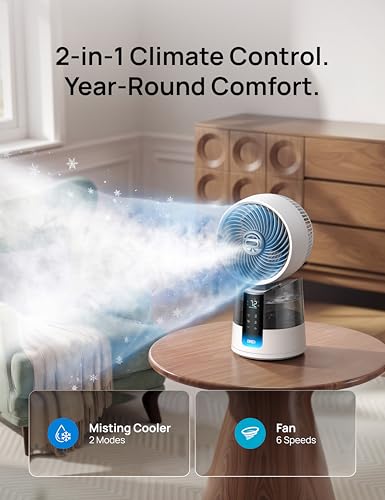
The DREO TurboCool Misting Fan 516 is a plug-in misting desk fan with 1.7 MHz ultrasonic mist, a 1.3 liter tank, 512 CFM of airflow and an oscillating head. For more models, see our Personal & Desk Fans page.
Our Verdict
This is the most complete misting desk fan we have looked at. DREO lists a 5°F cooling effect, 26 feet per second of wind, 6 speeds and 2 modes, and the 1.3 liter tank is rated for up to 12 hours of cooling.
It is larger and heavier than a USB mister at 4.84 pounds, and it needs an outlet.

DREO TurboCool Misting Fan 516


As an Amazon Associate we earn from qualifying purchases. Product prices and availability are accurate as of the date/time indicated.
Key Specifications
| Feature | Specification |
|---|---|
| Brand | DREO |
| Mist | 1.7 MHz ultrasonic |
| Tank | 1.3 liters, up to 12 hours |
| Airflow | 512 CFM, 26 ft/s |
| Cooling | 5°F drop listed |
| Speeds | 6, with 2 modes |
| Oscillation | 5 horizontal angles to 150 degrees, 30 degree vertical tilt |
| Noise | 20 dB listed |
| Weight | 4.84 pounds |
| Dimensions | 7.91 x 8.62 x 15.75 inches |
Design
The white body is about 15.75 inches tall, so it works as a desk or side table fan rather than a pocket one. A visible tank shows the water level at a glance.
The 1.3 liter tank is large enough for a workday or a night of sleep, according to the listing.
Controls and Performance
Ultrasonic mist is very fine, and DREO says it adds a cool, refreshing breeze without making you or your surroundings wet. The oscillation offers 5 horizontal angles (30, 60, 90, 120 and 150 degrees) and a 30 degree vertical tilt.
The 20 dB figure is the maker’s rating at the lowest setting.
Using a Misting Fan
Use clean water and keep the fan a little away from paper and electronics. Misting works best in dry air and less well in humid weather.
Mist cools the air near you, not the whole room, so aim the fan at where you sit.
Care and Battery Life
Empty the tank when you will not use the fan for a few days and wipe the tank and mist outlet to stop mineral buildup. Hard water can leave white deposits.
The fan plugs in, so there is no battery to manage.
How It Compares
Against the Otlonpe desk misting fan, the DREO has a much larger tank and stronger airflow, but it needs an outlet and costs far more.
Against the BEXIHIPPALZ misting fan, it is larger and more powerful, and the BEXIHIPPALZ runs on USB-C with a smaller tank.
Pros and Cons
| Pros | Cons |
|---|---|
| Large 1.3 liter tank | Heavy at 4.84 pounds |
| Ultrafine mist | Needs an outlet |
| Wide oscillation | Costs more than USB misters |
| Low listed noise | Large for a small desk |
Who Should Buy It
| Who Should Buy It? | Who Should Look Elsewhere? |
|---|---|
| Home offices | Travelers |
| Bedrooms in dry climates | Anyone who wants a battery fan |
| Anyone who wants a long mist session | Humid climates |
| Anyone who wants strong airflow | Small desks |
For more options, see our picks for handheld misting fans and desk fans.
Final Verdict
The DREO TurboCool Misting Fan 516 is a strong plug-in misting desk fan with a big tank, ultrafine mist and wide oscillation. Choose it if you work in dry heat and want misting that lasts the day. You can check the current price and details for the DREO TurboCool Misting Fan 516.
Frequently Asked Questions
How long does the tank last?
DREO lists up to 12 hours of cooling from the 1.3 liter tank.
Does it wet the desk?
DREO describes the ultrasonic mist as ultrafine and not adding moisture to you or your surroundings.
Is it battery powered?
No, the listing describes a plug-in fan.
About the author
Daniel Brooks is a home cooling editor at WikiCooling, covering window, portable, through-the-wall and mini-split air conditioners, fans, and dehumidifiers. He researches cooling capacity, energy efficiency, noise levels, installation requirements, and buyer feedback to help homeowners choose the right unit for their room size, climate, and budget.