
8 Best Conventional Window Air Conditioners with Inverter Compressors of 2026
Conventional window air conditioners with inverter compressors offer significant energy savings and quieter operation. Our 2024 roundup highlights the top models for efficient cooling without the need for a specialized electrical outlet.
 By Daniel Brooks
Updated October 7, 2026
By Daniel Brooks
Updated October 7, 2026
Conventional window air conditioners with inverter compressors offer quieter operation and significant energy savings compared to traditional on-off units. This guide is for anyone seeking efficient, modern cooling for a single room without the complexity of a central system. We compared eight models based on manufacturer specifications for cooling capacity, noise levels, smart connectivity, and installation requirements to identify the best options. For a broader look at this category, explore our guide to Conventional Window Air Conditioners.
All Products Compared
| Product | Best For | Cooling Capacity | Room Size | Noise | Notable Feature |
|---|---|---|---|---|---|
| Bonnlo 12000 BTU Window Air Conditioner with Inverter | Large rooms with smart control | 8000-12000 BTU | 300-520 sq ft | 42 dBA (sleep) | Pre-assembled side panels |
| LG 10,000 BTU Dual Inverter Window Air Conditioner | Medium rooms with brand reliability | 10,000 BTU | 450 sq ft | 44 dBA (sleep) | LG ThinQ app & voice control |
| Frigidaire 8,000 BTU Smart Inverter Window Air Conditioner | Small rooms with app control | 8,000 BTU | 350 sq ft | Not listed | Clean Filter alerts |
| Hisense 12,000 BTU Inverter Window Air Conditioner | Large rooms with a low-profile design | 12,000 BTU | 550 sq ft | Not listed | UltraSlim profile |
| ROVSUN 8000 BTU Inverter Window AC | Year-round use with heating | 8,000 BTU cooling / 8,400 BTU heating | 350 sq ft | 40 dBA (sleep) | Built-in heat pump |
| Hisense 8,000 BTU Inverter Window Air Conditioner | Energy-conscious small rooms | 8,000 BTU | 350 sq ft | Not listed | ENERGY STAR certified |
| GE Profile ClearView 10,300 BTU Window Air Conditioner | Maintaining a window view | 10,300 BTU | 450 sq ft | 40 dBA | Flex-depth for various wall thicknesses |
| Midea 18,000 BTU Smart Inverter Window Air Conditioner | Very large rooms | 18,000 BTU | 1,000 sq ft | 48 dBA | Requires 230V outlet |
| Award | Product | WikiCooling Score About WikiCooling ScoreThe WikiCooling Score is our own rating from 0 to 10, based on the criteria described on our How We Review page. It reflects research, not laboratory measurement, and is never influenced by manufacturers, retailers, or affiliate commissions. Learn more › | |
|---|---|---|---|
| Best Overall |
 Bonnlo 12000 BTU Window Air Conditioner
|
9.1/10 | Buy |
| Best Premium |
 LG 10,000 BTU Dual Inverter Window Air Conditioner
|
8.0/10 | Buy |
| Best Value |
 Frigidaire 8,000 BTU Smart Inverter Window Air
|
8.0/10 | Buy |
 Hisense 12,000 BTU Inverter Window Air Conditioner
|
8.0/10 | Buy | |
| Best Budget |
 ROVSUN 8000 BTU Inverter Window AC
|
7.8/10 | Buy |
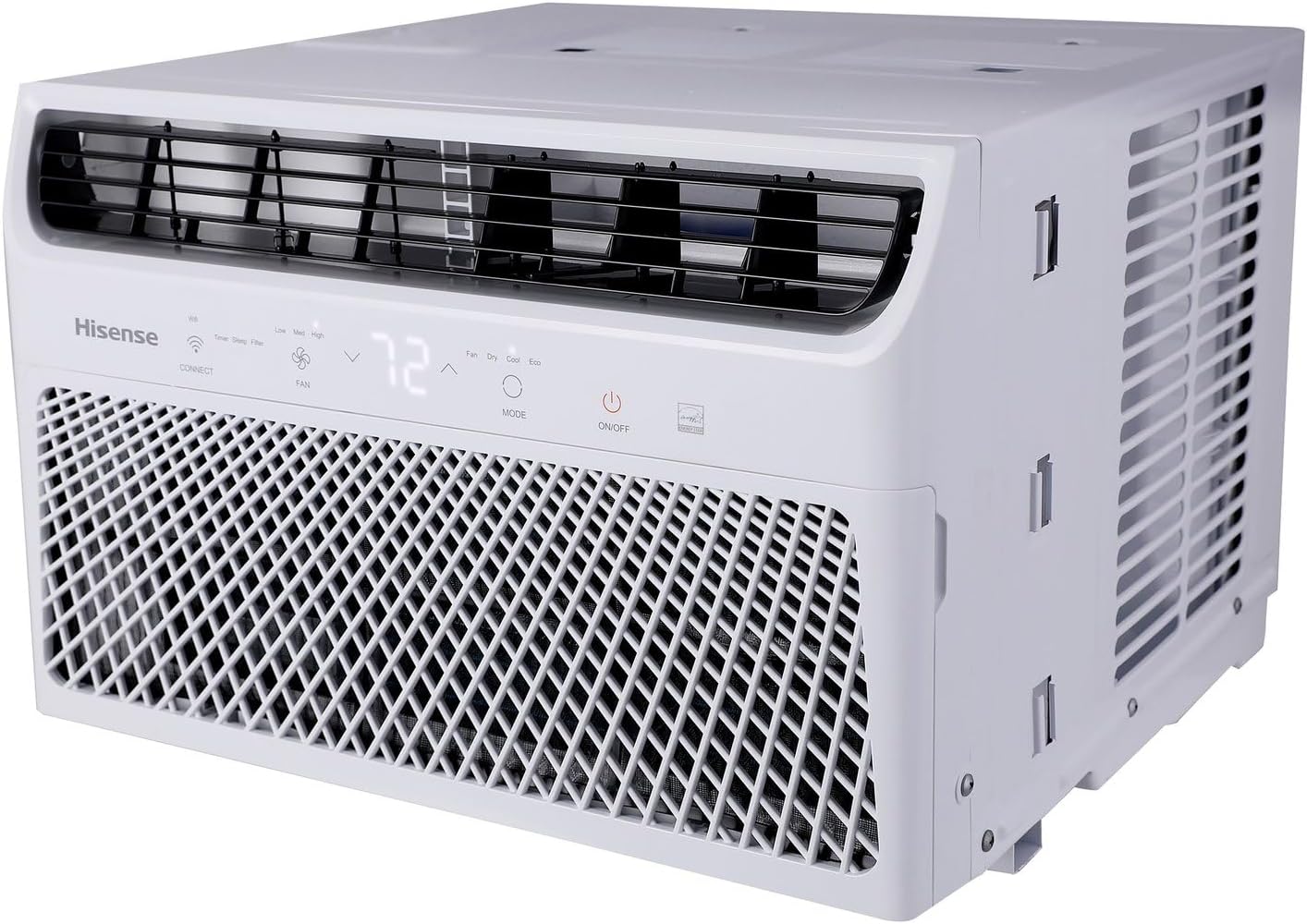 Hisense 8,000 BTU Inverter Window Air Conditioner
|
7.5/10 | Buy | |
 Midea 18,000 BTU Smart Inverter Window Air
|
7.0/10 | Buy | |
 GE Profile ClearView 10,300 BTU Window Air
|
7.0/10 | Buy |
Bonnlo 12000 BTU Window Air Conditioner
With an inverter compressor and Wi-Fi connectivity, this window AC from Bonnlo delivers efficient, quiet cooling for rooms up to 520 square feet. Its 42 dB sleep mode and smart controls make it a convenient choice for bedrooms and living spaces.
Pros
- Inverter compressor for efficient cooling
- Ultra-quiet 42 dB sleep mode
- Wi-Fi and voice control compatible
- Pre-installed side panels for easy installation
- Multiple operating modes for flexibility
Cons
- Fits only windows with 14.5-inch minimum height
- No heat pump or heating mode
- Installation requires secure window frame for support
LG 10,000 BTU Dual Inverter Window Air Conditioner
With a dual inverter compressor and BLDC motor, this LG window AC operates as low as 44 dB while cooling up to 450 sq ft. Wi-Fi connectivity via the ThinQ app and voice control add convenience. It suits medium to large rooms where low noise and energy savings are priorities.
Pros
- Ultra-quiet operation at 44 dB
- Energy-saving dual inverter technology
- Wi-Fi and voice control via ThinQ app
- Washable filter for easy maintenance
- Cools up to 450 square feet
Cons
- Fits only double-hung windows (22-36 in. wide)
- Heavy unit (62.8 lbs) for single-person installation
- No heating function
Frigidaire 8,000 BTU Smart Inverter Window Air
This Frigidaire window air conditioner uses an inverter compressor to deliver steady cooling at 41 dB for quiet operation. The 8,000 BTU output covers rooms up to 350 square feet, and Wi-Fi enables app or voice control. It is a good choice for anyone who wants energy-efficient, smart cooling in a bedroom or small living room.
Pros
- Quiet operation at 41 dB
- Inverter compressor for energy savings
- Wi-Fi and app control
- Energy Star certified
- Washable filter with alert
Cons
- Heavy at 55 pounds, may need two people to install
- Requires window opening height of exactly 14 inches
- Only 1-year warranty
Hisense 12,000 BTU Inverter Window Air Conditioner
This Hisense window AC delivers 12,000 BTU of cooling for rooms up to 550 square feet, using inverter technology for stable temperatures and quieter operation at 35 dB. Wi-Fi control via the ConnectLife app adds convenience, and the low-profile design keeps the window unobstructed. It's a solid choice for larger bedrooms, living rooms, or offices that need efficient, smart cooling.
Pros
- Quiet 35 dB operation
- Inverter technology for efficiency
- Smart app control from anywhere
- Easy installation with included bracket
- Low-profile design saves window space
Cons
- Some gaps in side walls during installation
- Heavy at 63.9 pounds
- No heat mode included
ROVSUN 8000 BTU Inverter Window AC
This window air conditioner delivers 8000 BTU cooling and 8400 BTU heating with inverter technology for 35% energy savings. It supports WiFi and voice control, operates quietly at 40 dB, and fits windows 24.5 to 36 inches wide.
Pros
- Inverter compressor provides 35% more energy savings with a 13.2 CEER rating
- WiFi-enabled with app and voice control (Alexa/Google Assistant)
- Ultra quiet operation at 40 dB in sleep mode
- Fast cooling and heating covering up to 350 sq. ft.
- Easy slide-in installation with included side panels
Cons
- Some units missing side tracks for closing window opening as noted in user reviews
- Cool/ECO mode should not be used below 32°F, heat mode below 5°F
- Minimum window height requirement of 14.5 inches may limit fit
Hisense 8,000 BTU Inverter Window Air Conditioner
This Hisense 8,000 BTU window unit uses inverter technology for quiet, steady cooling in rooms up to 350 square feet. It offers Wi-Fi and remote control, three operating modes, and a dehumidifier function, making it a versatile option for bedrooms, living rooms, and offices. Best suited for those who want efficient, connected cooling with minimal noise.
Pros
- Quiet operation at 41 dB
- Inverter maintains steady temperature
- Wi-Fi and remote control included
- Washable filter for easy maintenance
- ENERGY STAR certified
Cons
- May not fit all window types
- No heating mode
- Heavy at 44.5 pounds
Midea 18,000 BTU Smart Inverter Window Air
This 18,000 BTU window air conditioner from Midea uses inverter technology for quieter, more efficient cooling of spaces up to 1,000 square feet. It offers Wi-Fi control via the SmartHome app, Alexa and Google Assistant voice commands, and a noise level as low as 48 dB. Best for large living areas or open-plan homes where a 230V outlet is available.
Pros
- Energy Star certified
- Inverter technology reduces power consumption
- SmartHome app with voice control
- Quiet operation at 48 dB
- Cools large rooms up to 1,000 sq ft
Cons
- Requires a 230V outlet, not standard 115V
- Heavy at 91.5 pounds, may need two people to install
- Fits windows with minimum width 28 inches
GE Profile ClearView 10,300 BTU Window Air
Designed to sit below the window sill, this 10,300 BTU inverter window AC preserves the full view and allows natural light. It cools rooms up to 450 square feet with ultra quiet operation as low as 40 dB, and includes WiFi connectivity for remote control via the SmartHQ app. Best for users who prioritize low noise and smart features without sacrificing window visibility.
Pros
- Ultra quiet operation (40 dB)
- Full window view design
- Inverter technology for efficient cooling
- WiFi smart control with app
- Flex-depth fits various wall thicknesses
Cons
- Heavy at 75.7 pounds, may require two people for installation
- Can cause wall vibration when compressor runs
- Only compatible with double-hung windows
Top 3 Conventional Window Air Conditioners with Inverter Compressors Reviewed
#1 Bonnlo 12000 BTU Window Air Conditioner with Inverter: Best Overall
Why We Picked It
The Bonnlo unit stands out for its combination of high capacity, smart features, and user-friendly design, making it a versatile top pick. Its inverter technology promises substantial energy savings, while the pre-assembled side panels address a common installation hurdle. The inclusion of comprehensive smart controls via app and voice assistants provides modern convenience.
Key Specifications
- Cooling Capacity: 8000-12000 BTU
- Room Size: 300-520 square feet
- Noise Level: 42 dBA in sleep mode
- Energy Efficiency: 15.0 CEER rating
- Window Fit: Width 24″ – 36″, Height 14.5″ minimum
| Pros | Cons |
|---|---|
|
|
Best For
This model is best for cooling larger rooms like living rooms or master bedrooms where smart home integration and easy installation are priorities.
You can check the latest details for the Bonnlo 12000 BTU Window Air Conditioner with Inverter.
#2 LG 10,000 BTU Dual Inverter Window Air Conditioner: Best for Brand Reliability
Why We Picked It
LG’s Dual Inverter technology and established brand reputation for durability make this a strong contender for those prioritizing long-term performance. Its smart platform, LG ThinQ, offers robust remote control and scheduling. The unit is designed for efficient cooling in medium to large rooms with a focus on quiet operation.
Key Specifications
- Cooling Capacity: 10,000 BTU
- Room Size: 450 square feet
- Noise Level: 44 dBA in sleep mode
- Refrigerant: Eco-friendly R32
- Window Fit: Width 22″ – 36″, Height 13″
| Pros | Cons |
|---|---|
|
|
Best For
This LG model is best for buyers who value brand heritage, a proven smart home platform, and efficient cooling for a medium-sized room.
You can check the latest details for the LG 10,000 BTU Dual Inverter Window Air Conditioner.
#3 Frigidaire 8,000 BTU Smart Inverter Window Air Conditioner: Best for Small Rooms
Why We Picked It
Frigidaire’s offering is a solid, energy-efficient choice perfectly sized for bedrooms or small living rooms up to 350 square feet. Its Wi-Fi connectivity and Clean Filter alerts add smart convenience to routine maintenance. The Energy Star certification and inverter technology indicate a focus on lower operating costs.
Key Specifications
- Cooling Capacity: 8,000 BTU
- Room Size: 350 square feet
- Certification: ENERGY STAR
- Voltage: 115V
- Features: 6-way airflow, three fan speeds
| Pros | Cons |
|---|---|
|
|
Best For
This Frigidaire unit is best for cooling smaller bedrooms or offices where energy savings and smart features are important.
You can check the latest details for the Frigidaire 8,000 BTU Smart Inverter Window Air Conditioner.
How to Choose a Conventional Window Air Conditioner with Inverter Compressor
Match Cooling Capacity to Your Room
Selecting the correct BTU (British Thermal Unit) rating is the most critical step. An undersized unit will run constantly without cooling effectively, while an oversized unit will short-cycle, wasting energy and failing to dehumidify properly. Use the sizing chart below as a starting point, adjusting for factors like sunlight, occupancy, and kitchen use.
ENERGY STAR publishes this general guide for sizing a room air conditioner by floor area:
| Room Size (sq ft) | Cooling Capacity (BTU/hr) |
|---|---|
| 100 to 150 | 5,000 |
| 150 to 250 | 6,000 |
| 250 to 300 | 7,000 |
| 300 to 350 | 8,000 |
| 350 to 400 | 9,000 |
| 400 to 450 | 10,000 |
| 450 to III550 | 12,000 |
| 550 to 700 | 14,000 |
| 700 to 1,000 | 18,000 |
Adjust for your room: reduce capacity by 10 percent for a heavily shaded room, increase it by 10 percent for a very sunny room, add 600 BTU for each regular occupant beyond two, and add 4,000 BTU if the unit cools a kitchen. Source: ENERGY STAR.
Window Fit and Installation
Measure your window opening’s height and width precisely and compare them to the unit’s required range. Check if the model uses a fixed or expandable chassis and what installation hardware is included. Some units, like the Bonnlo, feature pre-assembled panels to streamline the process, while others may require more assembly.
Noise and Inverter Compressors
Inverter compressors modulate their speed rather than shutting on and off, which significantly reduces operational noise, especially at night. Look for the decibel (dBA) rating, often listed for a quiet or sleep mode. A rating in the low 40s dBA is typical for these quieter inverter models and is suitable for bedrooms.
Energy Efficiency
Inverter technology inherently improves efficiency by avoiding the high-energy startup of a traditional compressor. Look for the CEER (Combined Energy Efficiency Ratio) rating; a higher number indicates better efficiency. The ENERGY STAR certification is another reliable marker of an efficient unit that meets strict government-backed standards.
Controls and Smart Features
Modern window ACs offer control via remote, smartphone app, and voice assistants like Alexa or Google Assistant. App control allows for scheduling and remote adjustments, which can enhance comfort and efficiency. Consider which ecosystem you use and ensure the unit’s app has the functionality you need.
Electrical Requirements and Maintenance
Most standard window ACs run on 115V/120V household current, but larger models like the 18,000 BTU Midea require a dedicated 230V outlet. Always verify the unit’s voltage and amperage against your home’s circuitry. For maintenance, prioritize models with washable, easy-access filters and features like filter change reminders.
How We Evaluate Conventional Window Air Conditioners
Our evaluation is based on a direct comparison of manufacturer specifications and listing information for each model. We prioritize factors most relevant to inverter-equipped window units: cooling capacity matched to room size, reported noise levels, energy efficiency ratings (CEER, ENERGY STAR), the scope of smart controls, and installation specifics like window fit. We consider user rating scores as an indicator of general satisfaction but do not interpret individual reviews. Always confirm the exact capacity, electrical requirements, and window dimensions for your chosen model before purchasing.
Frequently Asked Questions
What size inverter window air conditioner do I need?
Use the room size in square feet as your primary guide, referencing the sizing chart above. An 8,000 BTU unit typically cools a room up to 350 sq ft, a 10,000 BTU unit up to 450 sq ft, and a 12,000 BTU unit up to 550 sq ft. Adjust this base number for room conditions like sunlight and occupancy.
Are inverter window ACs quiet enough for a bedroom?
Yes, their variable-speed compressors are significantly quieter than traditional units. Many inverter models feature a dedicated sleep mode with noise levels in the low 40s decibels (dBA), which is comparable to a quiet library. Always check the manufacturer’s listed dBA rating for the quietest mode.
How do I know if a window AC will fit my window?
You must measure the exact height and width of your window opening. Compare these measurements to the “window fit” or “installation” range provided in the product specifications. The unit must fit within the minimum and maximum dimensions for both height and width to install securely.
Do I need a special electrical outlet for a window air conditioner?
Many conventional window ACs use a standard 115V/120V plug, but you should check the unit’s listed amperage to ensure your circuit can handle the load without overloading. Larger capacity models, like 18,000 BTU units, often require a dedicated 230V outlet, as seen with the Midea model here.
What is the advantage of an inverter compressor?
The main advantages are energy savings and quieter operation. By varying the compressor motor speed to maintain a set temperature, it avoids the high-energy startup cycles of a traditional on/off compressor. This leads to less wear, lower electricity bills, and a more consistent, quieter cooling experience.
Final Verdict
The Bonnlo 12000 BTU Window Air Conditioner with Inverter earns our top spot as the best overall for its powerful cooling range, thoughtful installation design, and comprehensive smart controls, making it a highly capable and convenient choice. For those needing cooling for a very large space, the Midea 18,000 BTU Smart Inverter Window Air Conditioner is the clear high-capacity alternative, provided you have the required 230V outlet. The key consideration for any buyer is accurately matching the unit’s BTU capacity and physical dimensions to your specific room and window.
About the author
Daniel Brooks is a home cooling editor at WikiCooling, covering window, portable, through-the-wall and mini-split air conditioners, fans, and dehumidifiers. He researches cooling capacity, energy efficiency, noise levels, installation requirements, and buyer feedback to help homeowners choose the right unit for their room size, climate, and budget.