
6 Best Portable Air Conditioners for RVs of 2026
We compared six portable air conditioners for RVs on cooling capacity, room size, noise and features.
 By Daniel Brooks
Updated October 31, 2026
Portable air conditioners for RVs help where the rooftop unit cannot keep up, or cool a bunk or van without running the main system all night. We compared six compact compressor units from Cybertake, iRooVee, SYSXLT, CUELEP, Caulitar and FO-KOKO on cooling capacity, power draw, noise and heat.
To browse every model we cover, visit our Portable Camping Air Conditioners page.
All Products Compared
| Product | Best For | Cooling | Room Size | Setup | Highlights |
|---|---|---|---|---|---|
| Cybertake Camping Air Conditioner with Heat | Overall | 5,100 BTU cool, 6,100 BTU heat | Up to 130 sq ft | AC and DC | IPX4, R290, 3 fan speeds |
| iRooVee 5,000 BTU Tent Air Conditioner with Heat | Low power and heat | 5,000 BTU | Tents, RVs, truck cabs | 110V, under 400W | Heat, turbo, 24h timer |
| SYSXLT 3,400 BTU RV Air Conditioner | Bunks and vans | 3,400 BTU | 10 to 107 sq ft | 110V, 300W | 42 dB, auto-evaporation, 1-12h timer |
| CUELEP 5,200 BTU Tent Air Conditioner | 110V hookups | 5,200 BTU | Tents, RVs, trucks | 110V AC only, 450W | Dehumidifier, carry handle |
| Caulitar 6,800 BTU Camping Air Conditioner and Heater | Heat and cool | 6,800 BTU cool, 7,500 BTU heat | Tents, RVs, trucks | 110V AC or 12V/24V via power station | Heat, sleep mode, 24h timer |
| FO-KOKO 6,800 BTU Dual Hose Camping AC and Heater | Dual hose | 6,800 BTU cool, 7,500 BTU heat | Tents, RVs, vans | 550W, dual hose | 5 modes, heat |
| Award | Product | WikiCooling Score About WikiCooling ScoreThe WikiCooling Score is our own rating from 0 to 10, based on the criteria described on our How We Review page. It reflects research, not laboratory measurement, and is never influenced by manufacturers, retailers, or affiliate commissions. Learn more › | |
|---|---|---|---|
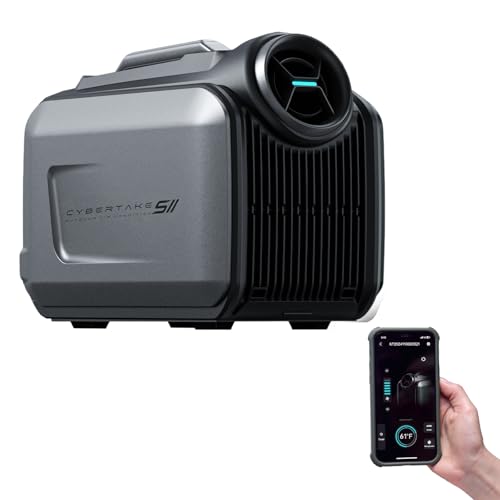 Cybertake Camping Air Conditioner with Heat |
Buy | ||
| Best Value |
 iRooVee 5,000 BTU Tent Air Conditioner with Heat |
Buy | |
| Best Budget |
 SYSXLT 3,400 BTU RV Air Conditioner |
Buy | |
| Best Overall |
 CUELEP 5,200 BTU Tent Air Conditioner |
Buy | |
 Caulitar 6,800 BTU Camping Air Conditioner |
Buy | ||
| Best Premium |
 FO-KOKO 6,800 BTU Dual Hose Camping AC and Heater |
Buy |


Top 3 Portable Air Conditioners for RVs Reviewed
#1 Cybertake Camping Air Conditioner with Heat: Best Overall
Why We Picked It
This Cybertake unit cools with 5,100 BTU and heats with 6,100 BTU, runs on AC or DC power and has an IPX4 water-resistant shell, which suits RVs, boats and campsites where the weather turns.
Cybertake rates it for spaces up to 130 sq ft and an outside temperature range of 41°F to 113°F, and it can cool to 60°F or heat to 90°F. Four modes cover cool, heat, dehumidify and Eco+, and Cybertake says Eco+ uses as little as 1 kWh per 8 hours, which is what makes it practical on RV house batteries and power stations. Three fan speeds, a 0 to 12 hour timer and precise temperature control round out the controls, and the noise is listed at 40 dB. The shell is IPX4 rated to repel splashes and rain, the silicone buttons are waterproof, and it uses R290 refrigerant. A full kit of hoses and adapters is included, and Cybertake backs it with a one year warranty. The DC boost converter is sold separately.
Key Specifications
- Cooling: 5,100 BTU
- Heating: 6,100 BTU
- Coverage: Up to 130 sq ft
- Power: AC and DC
- Noise: 40 dB
- Protection: IPX4 shell, waterproof buttons
- Weight: 25.6 pounds
| Pros | Cons |
|---|---|
|
|
Things to Consider
For RV use it works best as a supplement to the rooftop unit or for a sleeping area. Budget for the DC boost converter if you want to run it from the house battery.
Best For
This camping air conditioner is best for RVs, boats and campsites that see rain and cold nights.
Check the current price and availability of the Cybertake Camping Air Conditioner with Heat on Amazon.
#2 iRooVee 5,000 BTU Tent Air Conditioner with Heat: Best Low Power with Heat
Why We Picked It
iRooVee’s 5,000 BTU tent air conditioner adds a heat mode and a turbo mode to a compact unit that draws under 400 watts, which suits RVs, trucks and vans as well as tents.
The draw is the headline: iRooVee says it runs under 400 watts, so it will not drain a battery bank or a small generator as fast as a home portable AC. Cooling mode can drop the temperature by 18°F within about five minutes, and the set range runs from 60°F to 88°F. Five functions cover cooling, dehumidifying, fan only, a high-power turbo mode for fast relief and an ultra-quiet sleep mode, and the title lists a heat mode for cooler nights. The 24 hour timer lets you cool the space before bed or shut the unit off after you fall asleep. Because it is self-contained with a carry handle, there is nothing to install: set it down, plug it in and duct the air where you want it. It weighs 32 pounds.
Key Specifications
- Cooling: 5,000 BTU
- Power: Under 400W
- Modes: Cool, Dehumidify, Fan, Turbo, Sleep, Heat
- Temperature range: 60°F to 88°F
- Timer: 24 hour
- Size: 21.6 x 11.8 x 11 inches
- Weight: 32 pounds
| Pros | Cons |
|---|---|
|
|
Things to Consider
The listing does not give a coverage area or a noise figure, so compare it with units that do if those matter. It is a 110V unit, so pair it with a hookup, inverter or power station.
Best For
This camping air conditioner is best for RVs, truck cabs and vans on shore power.
Check the current price and availability of the iRooVee 5,000 BTU Tent Air Conditioner with Heat on Amazon.
#3 SYSXLT 3,400 BTU RV Air Conditioner: Best for Bunks
Why We Picked It
SYSXLT’s 3,400 BTU RV air conditioner draws just 300 watts, the lowest power figure in our RV list, and runs at 42 dB, so it suits a sleeping area in an RV, van or camper.
This is a small, efficient compressor unit for spaces from 10 to 107 sq ft. A GMCC compressor can drop the temperature by up to 18°F in about five minutes, and the range runs from 60°F to 88°F. Four modes cover cooling, fan, dehumidifier and sleep, and the low-noise motor keeps it at 42 dB, quiet enough for a bunk. A remote and a 1 to 12 hour timer let you control it from bed, and the exhaust hose connects in minutes with no outdoor unit to mount. It supports auto-evaporation, so you will rarely need to drain it. At 18.1 by 11 by 5.12 inches it slides into spaces where a larger unit will not, and the carry handle makes it easy to move between the RV, a tent and a room at home.
Key Specifications
- Cooling: 3,400 BTU
- Coverage: 10 to 107 sq ft
- Power: 300W
- Noise: 42 dB
- Modes: Cool, Fan, Dehumidifier, Sleep
- Timer: 1 to 12 hours
- Drainage: Auto-evaporation support
| Pros | Cons |
|---|---|
|
|
Things to Consider
At 3,400 BTU it cools a bunk, a van or a small camper rather than a full RV. Use it as a supplement to the rooftop unit, or for sleeping areas.
Best For
This camping air conditioner is best for RV bunks, vans and small campers.
Check the current price and availability of the SYSXLT 3,400 BTU RV Air Conditioner on Amazon.
Other Models Worth Considering
CUELEP 5,200 BTU Tent Air Conditioner. CUELEP’s 5,200 BTU tent unit runs on 110V AC at 450W, dehumidifies and measures about 11 by 20 by 11.8 inches.
Caulitar 6,800 BTU Camping Air Conditioner and Heater. Caulitar’s camping unit cools with 6,800 BTU, heats with 7,500 BTU and draws under 400 watts.
FO-KOKO 6,800 BTU Dual Hose Camping AC and Heater. FO-KOKO uses a dual hose design with 6,800 BTU of cooling and 7,500 BTU of heating in a 550W unit for tents, RVs and vans.
What to Expect from Portable Air Conditioners for RVs
A camping air conditioner is a small compressor unit, not an evaporative cooler. It removes heat and moisture from a tent, van or small cabin and sends the heat outside through one or two short ducts. Most run on household current, and some also accept a car outlet, a portable power station or a dedicated battery. They use far less power than a home portable AC, so they can run off grid for hours rather than minutes.
For more options, see our guides to portable camping air conditioners and camping air conditioners with heat. The product cards above show the current price for each model.
How to Choose Portable Air Conditioners for RVs
Power Sources for Camping Units
Check how each unit can be powered before you buy. Some run only on a standard outlet or generator, while others also accept a car outlet, a portable power station or a dedicated battery. Low running wattage matters most off grid, because it decides how long a power station or battery will last. Some DC setups need a converter that is sold separately.
Sizing for Tents and Vans
Camping units are small by design and are meant for tents, vans, truck cabs and small cabins, not houses. Fabric tents lose cool air quickly, so a tent with a reflective cover, a closed door and a shaded spot will feel much cooler. Check the listed coverage and pick a little more capacity than you think you need for a large family tent.
Units That Heat and Cool
Some camping air conditioners reverse to heat on cold nights, which lets one unit cover summer trips and shoulder seasons. Compare heating capacity as well as cooling, and remember that heating also draws power, so plan battery or generator capacity for both.
Ducts, Drainage and Setup
Most camping units connect to the tent through two short ducts, one for cold air in and one for warm air out, or they sit outside and blow cold air in through a tent port. Look for an included duct kit, a way to drain or evaporate condensate and a design that can stand up to dust and light rain if it will sit outside.
How We Evaluate Portable Air Conditioners for RVs
We rank these units on manufacturer specifications and listing details: cooling capacity, the room size the maker lists, noise, controls, setup, power use and price. We kept only new, in-stock units and left out accessories, renewed listings, color duplicates and listings with too little data. For this list we weighed power draw and RV power options first, then cooling, heat and noise.
Frequently Asked Questions
Can a portable AC replace an RV air conditioner?
A portable camping unit can cool a van, a small camper or a sleeping area, but it has far less capacity than a rooftop RV unit and works best as a supplement.
Can I run a camping AC on a generator?
Yes. Most units run on household current from a generator or campground hookup. Check the running wattage against your generator output.
Can a camping air conditioner run on a battery?
Some can. Units built for DC power or a dedicated battery can run off grid, but runtime depends on the battery capacity and the cooling mode, and some setups need a converter sold separately.
Final Verdict
The Cybertake Camping Air Conditioner with Heat is the best portable air conditioner for RVs, with AC and DC power, heating and a water-resistant shell. For low power draw with a heat mode, choose the iRooVee 5,000 BTU Tent Air Conditioner with Heat, and for a quiet bunk unit, the SYSXLT 3,400 BTU RV Air Conditioner.
About the author
Daniel Brooks is a home cooling editor at WikiCooling, covering window, portable, through-the-wall and mini-split air conditioners, fans, and dehumidifiers. He researches cooling capacity, energy efficiency, noise levels, installation requirements, and buyer feedback to help homeowners choose the right unit for their room size, climate, and budget.