
DREO TurboPoly Fan 512 Review: A Quiet DC Pedestal Fan with a 100 ft Reach
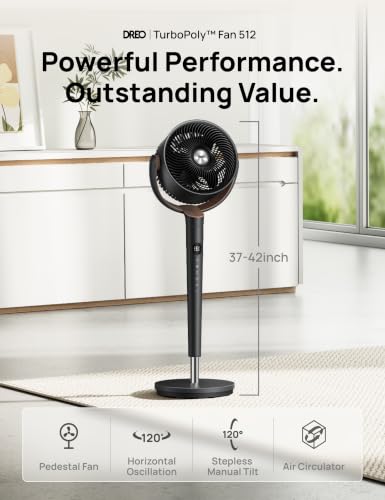
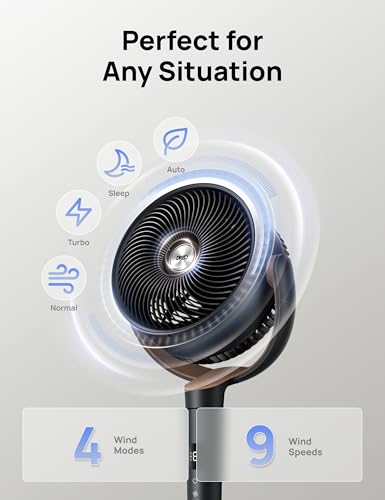
DREO's TurboPoly Fan 512 pairs a quiet DC motor with 9 speeds, 4 modes and a 120 degree sweep in a 37 to 42 inch pedestal fan.
 By Daniel Brooks
Updated October 22, 2026
The DREO TurboPoly Fan 512 is a DC motor pedestal fan that doubles as an air circulator. It offers 9 speeds and 4 modes, a 120 degree sweep and a rated reach of up to 100 ft, and it holds a 4.7 out of 5 average from 9,220 ratings, one of the strongest records among the pedestal fans we cover.
Our Verdict
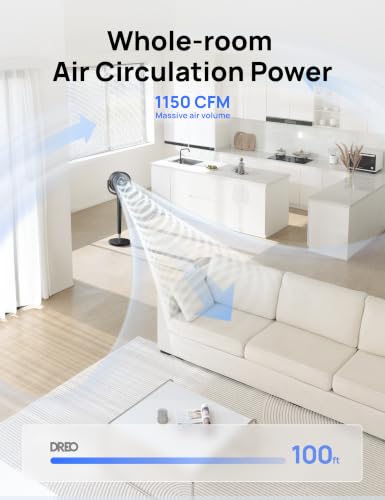
The TurboPoly Fan 512 is the pedestal fan we recommend to most people. The DC motor keeps it quiet on low, 9 speeds give you real control between a whisper and a strong breeze, and the 120 degree horizontal sweep covers most of a bedroom or living room. DREO rates the airflow at 1150 CFM.
The main trade-off is the vertical tilt, which you set by hand, and there is no app. If you want automatic up-and-down oscillation or smart control, DREO’s 502 or 704S cost more but add those features.

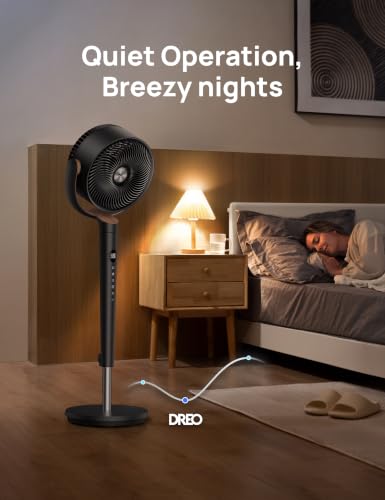
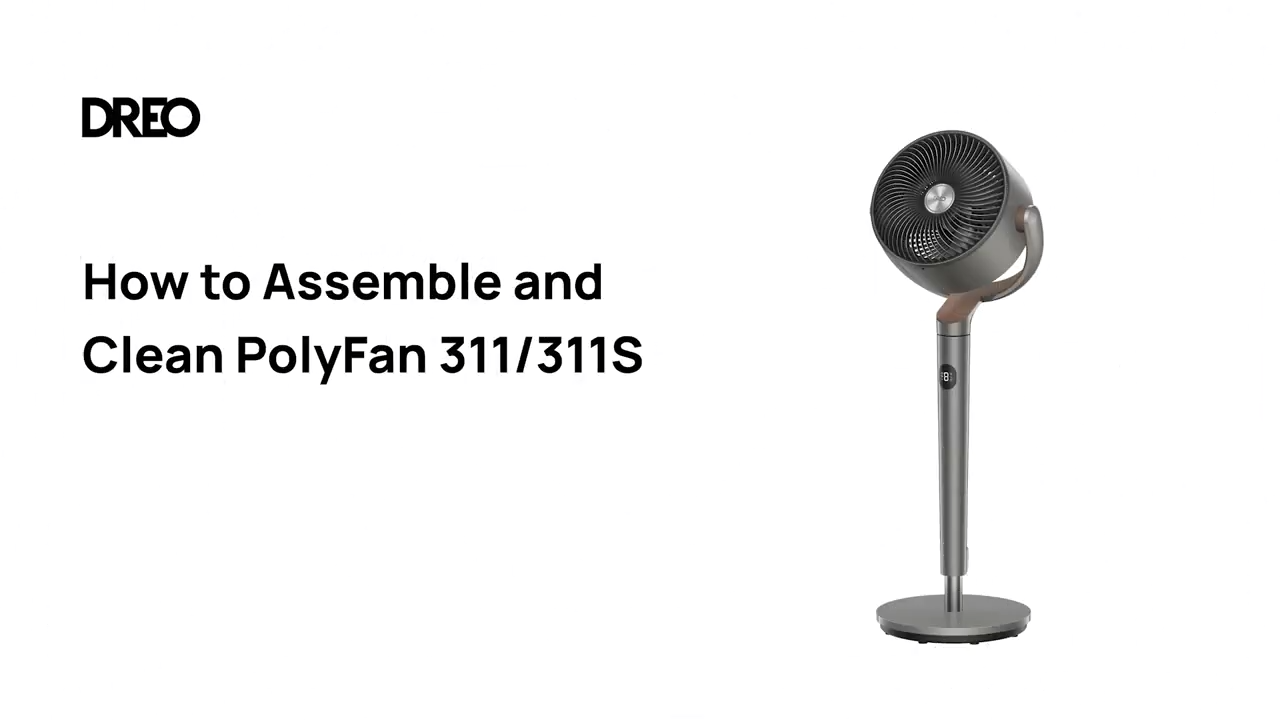
DREO TurboPoly Fan 512 DC Pedestal Fan


As an Amazon Associate we earn from qualifying purchases. Product prices and availability are accurate as of the date/time indicated.
Key Specifications
| Feature | Specification |
|---|---|
| Brand | DREO |
| Model | TurboPoly Fan 512 |
| Type | DC pedestal fan and air circulator |
| Height | 37 to 42 inches |
| Airflow | 1150 CFM, up to 100 ft |
| Speeds | 9 |
| Modes | 4 |
| Oscillation | 120 degrees horizontal |
| Vertical Tilt | 120 degrees, manual |
| Noise Level | 28.2 dB |
| Timer | 9 hours |
| Power | 75 watts rated |
| Weight | 14.5 pounds |
| Controls | Remote and panel |
Airflow and Coverage
DREO calls the 512 a fan, an oscillating fan and an air circulator in one. The air booster and blade design push air as far as 100 ft away, and the specifications list 1150 CFM. That is enough to circulate air through a bedroom, office or living room rather than just cooling the spot in front of it.
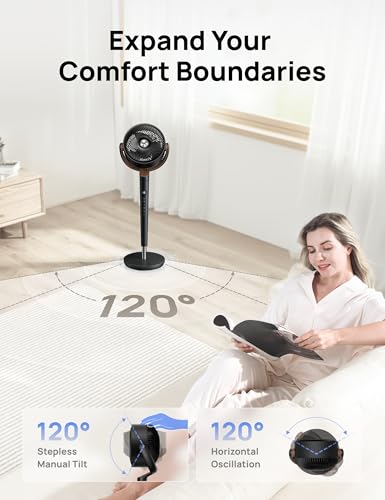
The head sweeps 120 degrees side to side by remote or panel, and you can tilt it through 120 degrees vertically by hand, from pointing at the floor to aiming at the ceiling. Aim it upward to move air around a whole room, or level to put a breeze on you.
Noise and Comfort
The DC motor is the reason the 512 suits bedrooms. The specifications list 28.2 dB, and the 9 speeds let you settle on a low setting that keeps air moving without the drone of an AC stand fan.
Four modes and a 9-hour timer round out the comfort features, so you can let the fan run as you fall asleep and switch itself off before morning.
Controls and Setup
You control the fan from the panel or the included remote. Horizontal oscillation, speed, mode and timer are all on the remote, while the vertical angle is a manual adjustment.
The pole adjusts from 37 to 42 inches, which is mattress and desk height rather than the 50-plus inches of a classic 18-inch stand fan. The fan weighs 14.5 pounds.
Placement Tips
Set a DC circulator a few feet from where you sit or sleep and aim it across the room rather than straight at you. Circulators work best when they keep the whole room’s air moving, so angling the head slightly upward often feels better than a direct blast.
If you run an air conditioner, place the fan where it can push the cooled air into the rest of the room. In winter, the same fan can spread warm air from a heater.
Running Costs and Care
DC motors draw little power, especially on the lower speeds most people use at night, so running the fan for many hours a day adds only a small amount to an electric bill.
Dust the grille and blades every few weeks during the season. A clean fan stays quieter and moves air more efficiently, and most circulator grilles come off for cleaning.
How It Compares
Against DREO’s own 502, the 512 has one more speed and a wider horizontal sweep on the remote, but the 502 oscillates vertically on its own. The 502 is the better choice if you want air to move up and down the room automatically.
Against a classic 18-inch AC fan such as Lasko’s Cyclone 1843, the DREO is quieter and more adjustable, while the Lasko reaches higher and pushes a stronger breeze across a large room.
Pros and Cons
| Pros | Cons |
|---|---|
| 4.7 average from 9,220 ratings | Vertical tilt is manual |
| Quiet DC motor | No app or voice control |
| 9 speeds and 4 modes | Shorter than 18-inch stand fans |
| 120 degree horizontal sweep | Rated at 75 watts on high |
| 9-hour timer | Remote has many small buttons |
Who Should Buy It
| Who Should Buy It? | Who Should Look Elsewhere? |
|---|---|
| Bedrooms and home offices | Smart home users |
| Anyone who wants fine speed control | Very large open rooms |
| Buyers who value a large ratings base | People who want automatic vertical oscillation |
| Rooms that need air circulation | Shoppers on a tight budget |
For more options, see our picks for the best pedestal fans and the best DREO pedestal fans.
Final Verdict
The DREO TurboPoly Fan 512 is a quiet, flexible DC pedestal fan with a strong ratings record and enough reach for most rooms. You can check the current price and details for the DREO TurboPoly Fan 512 DC Pedestal Fan.
Frequently Asked Questions
How tall is the DREO TurboPoly Fan 512?
It adjusts from 37 to 42 inches.
Does the DREO 512 have a remote?
Yes. The remote controls speed, mode, timer and horizontal oscillation.
Does the DREO 512 oscillate vertically?
You tilt it vertically by hand through 120 degrees. Only the horizontal sweep is automatic.
Is the DREO 512 quiet?
The specifications list 28.2 dB, and its DC motor runs quietly on low speeds.
Does the DREO 512 have Wi-Fi?
No. It runs from the panel and remote only.
How many speeds does it have?
9 speeds and 4 modes.
About the author
Daniel Brooks is a home cooling editor at WikiCooling, covering window, portable, through-the-wall and mini-split air conditioners, fans, and dehumidifiers. He researches cooling capacity, energy efficiency, noise levels, installation requirements, and buyer feedback to help homeowners choose the right unit for their room size, climate, and budget.