
Lasko 1827 Review: A Manual 18-Inch Pedestal Fan with 1970 CFM
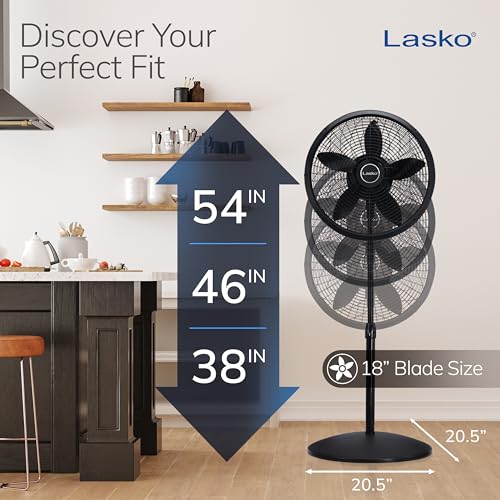
Lasko's 1827 is a no-frills 18-inch stand fan with 1970 CFM, a rotary dial and a 38 to 54.5 inch stand.
 By Daniel Brooks
Updated October 22, 2026
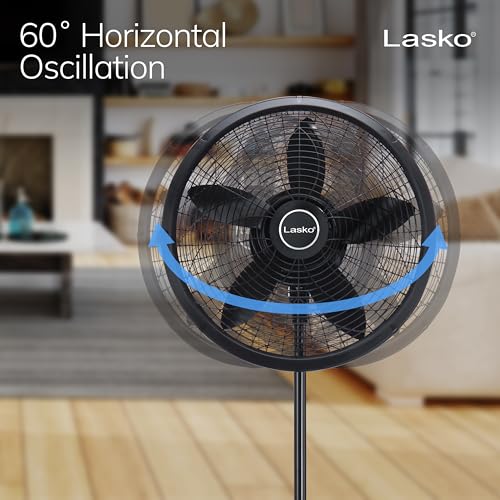
The Lasko 1827 is a manual 18-inch pedestal fan with a rotary dial, 60 degree oscillation and a 38 to 54.5 inch stand. The listing gives 1970 CFM, and it holds a 4.2 out of 5 average from 22,741 ratings among the pedestal fans we cover.
Our Verdict
The 1827 is the budget way to get a big 18-inch head. It moves 1970 CFM, reaches 54.5 inches and assembles without tools, and its large ratings base shows how many homes rely on it.
There is no remote or timer, and the 60 degree sweep is narrow, so it suits a fan you set once and leave.

Lasko 1827 18-Inch Adjustable Pedestal Fan



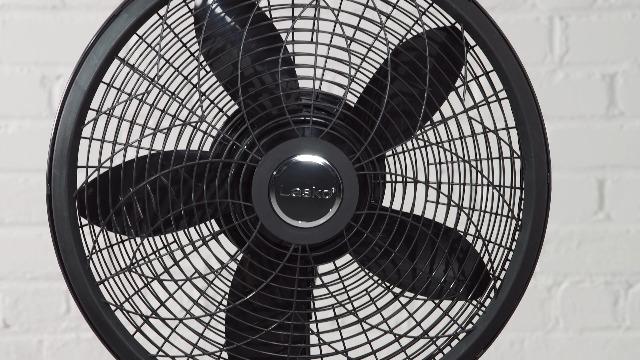
As an Amazon Associate we earn from qualifying purchases. Product prices and availability are accurate as of the date/time indicated.
Key Specifications
| Feature | Specification |
|---|---|
| Brand | Lasko |
| Model | 1827 |
| Type | AC pedestal fan |
| Blade Size | 18 inches, 5 blades |
| Height | 38 to 54.5 inches |
| Airflow | 1970 CFM |
| Speeds | 3 |
| Oscillation | 60 degrees |
| Controls | Rotary dial |
| Noise Level | 61.6 dB |
| Power | 114 watts |
| Warranty | 1 year limited |
Airflow
The 5-blade, 18-inch head moves 1970 CFM, the same rating as Lasko’s remote Cyclone 1885. Lasko describes it as a living room fan that also works in a bedroom.
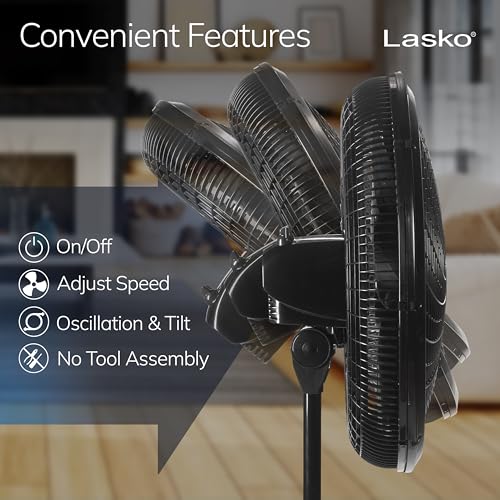
A tilt control lets you aim the breeze.
Controls and Setup
A rotary dial picks one of 3 speeds, and oscillation is 60 degrees. It needs no tools to assemble.
The specifications list 61.6 dB and 114 watts.
Safety
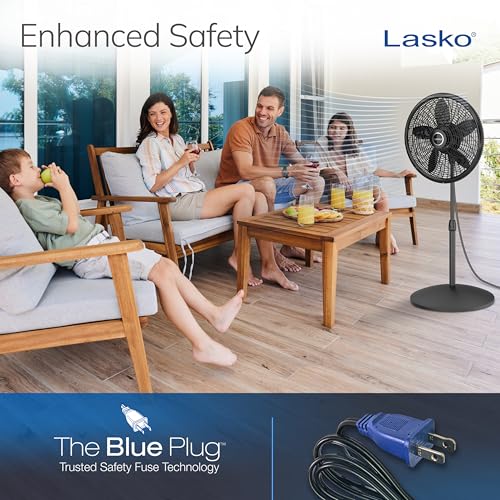
It is ETL listed and has Lasko’s Blue Plug safety fuse.
Placement Tips
Place a stand fan a few feet from your seat or bed and set the height so the head clears furniture. Oscillation spreads the air across a room, while a fixed head gives you a steady breeze.
In the evening, set the fan near an open window to pull in cooler outside air, or aim it toward a doorway to push warm air out of the room.
Running Costs and Care
AC stand fans draw more power on high than DC fans, so the lowest speed that keeps you comfortable saves the most. A timer stops the fan running all night when you only need it to fall asleep.
Wipe the blades and grilles every few weeks during the season and check that the head and pole are tight. A clean, tight fan runs quieter and wobbles less.
How It Compares
Against the Cyclone 1885, the 1827 gives up the remote, timer and wider sweep but matches its airflow.
Against BLACK+DECKER’s BFP18SXW, the Lasko has a much larger ratings base and a taller reach.
Pros and Cons
| Pros | Cons |
|---|---|
| 4.2 average from 22,741 ratings | No remote |
| 1970 CFM | No timer |
| Tall 54.5-inch reach | Narrow 60 degree sweep |
| Tool-free assembly | Draws 114 watts |
| Blue Plug safety | Listed at 61.6 dB |
Who Should Buy It
| Who Should Buy It? | Who Should Look Elsewhere? |
|---|---|
| Living rooms | Bedrooms where you want a remote |
| Kitchens and basements | Light sleepers |
| Buyers on a budget | Smart homes |
| Anyone who wants a big head | Whole-room circulation |
For more options, see our picks for the best 18-inch pedestal fans and the best pedestal fans for large rooms.
Final Verdict
The Lasko 1827 is a simple, proven 18-inch stand fan with plenty of airflow for the money. You can check the current price and details for the Lasko 1827 18-Inch Adjustable Pedestal Fan.
Frequently Asked Questions
Does the Lasko 1827 have a remote?
No. It uses a rotary dial.
How tall is it?
It adjusts from 38 to 54.5 inches.
How wide does it oscillate?
60 degrees.
How much air does it move?
The listing gives 1970 CFM.
Does it need tools to assemble?
No.
About the author
Daniel Brooks is a home cooling editor at WikiCooling, covering window, portable, through-the-wall and mini-split air conditioners, fans, and dehumidifiers. He researches cooling capacity, energy efficiency, noise levels, installation requirements, and buyer feedback to help homeowners choose the right unit for their room size, climate, and budget.